
If you are shopping for a stain for your cedar fence on an Edmonds property, you have probably noticed there is no shortage of products claiming to be the answer. Finding the best stain for cedar fence here is not the same as choosing one for a drier climate; Seattle-area fences deal with months of rain, constant moisture cycling, and wet-gray weather that chews through budget products fast. Pick the wrong stain and your fence can go silver-gray within a single rainy season, while the right one holds its warm color for 3 to 4 years before another coat.
Key Takeaways
- Cedar’s natural oils can make water-based stains absorb unevenly, so oil-based stains are the stronger choice for Pacific Northwest fences.
- Semi-transparent stains hit the sweet spot: enough pigment to block UV while still letting the grain show.
- In the Seattle area, a quality fence stain typically lasts 3 to 4 years before reapplication.
- New cedar should weather a few months before staining so the pores are open and ready to absorb.
- Timing matters: stain between late spring and early fall, when temperatures stay above 50°F and 48 hours of dry weather are in the forecast.
- Knowing which products actually work in wet climates saves money and avoids do-overs.
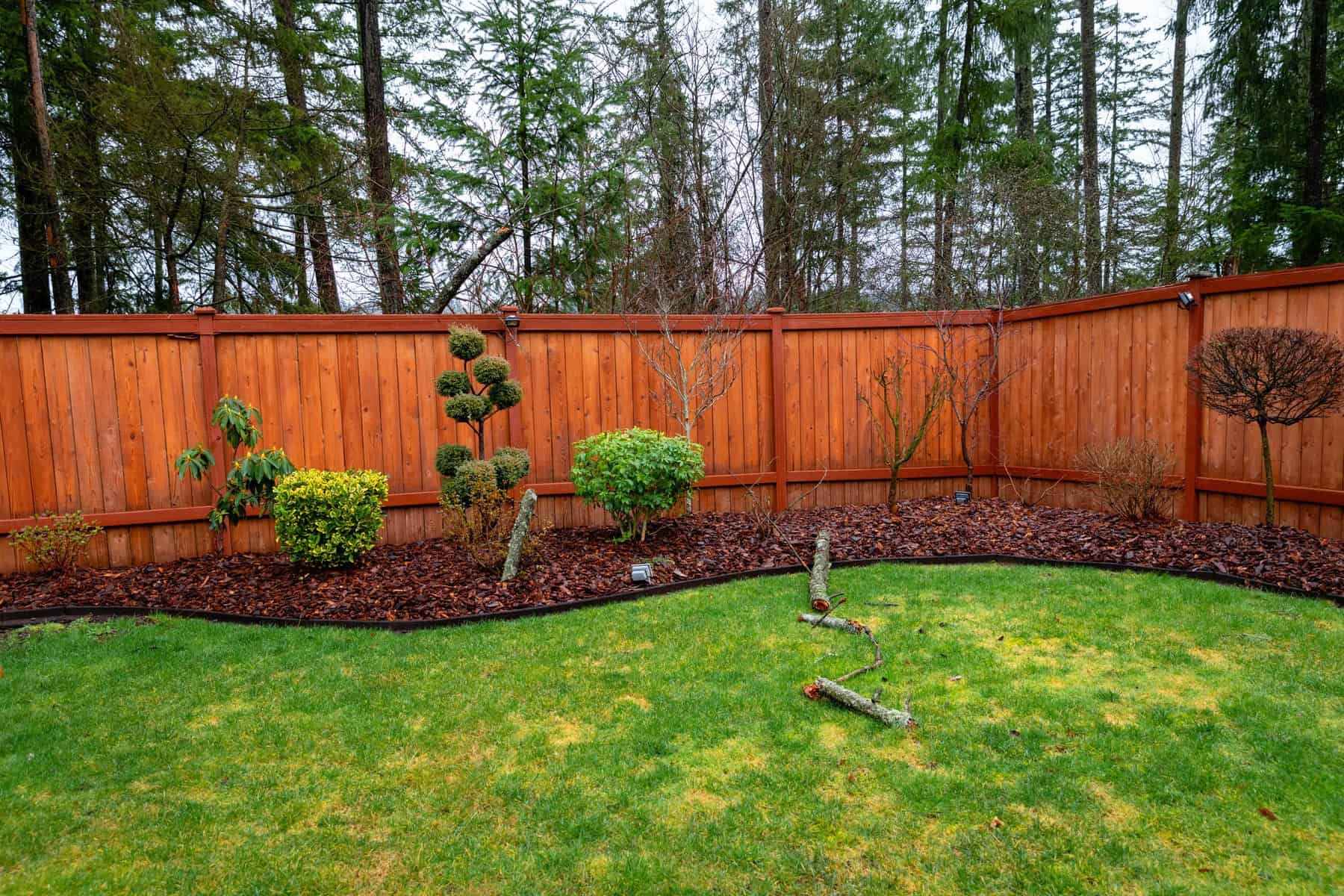
Why Cedar Fences in Edmonds Need the Right Stain
Cedar is one of the most popular fencing materials in the Pacific Northwest, and for good reason: it naturally contains oils that resist decay and insect damage. But those oils do not eliminate the need for added protection against the elements. Choosing the best stain for cedar fence in this climate starts with understanding what the wood is up against.
The Edmonds and greater Seattle area piles on the challenge: 150+ rainy days a year, high humidity, and constant wet-dry moisture cycles that are tough on unstained wood. Limited sun means moisture lingers, and marine air off Puget Sound carries extra humidity that speeds weathering.
UV breaks down the wood’s lignin, turning the surface gray, while moisture drives the expansion and contraction that creates cracks, warping, and rot. The right penetrating stain handles all of it: it blocks UV, repels moisture, and holds up through the long wet season, as long as you pick a product built for this climate.
Best Stain for Cedar Fence: Oil-Based or Water-Based?
This is the first question most Edmonds homeowners ask, and it matters more here than almost anywhere. Cedar’s oils can keep water-based stains from absorbing evenly, which is why oil-based stain is generally the better choice for cedar fences.
Water-based stains have improved a lot; they dry faster, clean up easily, and have lower odor, but cedar’s chemistry tends to work against them. Oil-based stains penetrate deeper and resist moisture longer, and from October through April in Edmonds, that deeper penetration is what keeps a fence protected. Oil-based formulas use petroleum-based solvents to carry pigment deep into the fibers, giving protection that often holds 3 to 5 years under normal conditions.
If VOC emissions concern you, the EPA national architectural coatings standards have pushed manufacturers toward lower-VOC oil-based formulas that still perform. TWP’s 1500 Series is one example, built to meet stricter VOC limits while keeping most of the performance of the original 100 Series.
Clear, Semi-Transparent, or Solid: What the Opacity Levels Mean
Before specific products, it helps to understand opacity, because this choice shapes how your fence looks for years.
Clear and transparent stains show all the grain and natural color, but they generally do not deflect UV, so the wood still grays over time, and clear sealers tend to score lowest in testing. In the Pacific Northwest, skipping UV protection is a fast track to a silver-gray fence.
Semi-transparent stains are where most cedar fence owners land. The biggest decision on cedar is opacity: too little pigment and the wood grays, too much and you bury the grain that made you choose cedar. A semi-transparent in a cedar tone protects against graying without hiding the grain, which is what most people want.
Solid stains give the most coverage and durability on paper, but they create a uniform finish that hides the grain completely. They fit a specific color scheme, but if you want the wood’s character to show, solid is not the way to go.
For most Edmonds homeowners with a cedar privacy fence, a semi-transparent oil-based stain is the right category.
The Top Cedar Fence Stains for Edmonds and Seattle
These are the products worth considering when you are hunting for the best stain for cedar fence in a wet climate, with what each does well and where it gives ground.
1. TWP 1500 Series (Total Wood Preservative)
The TWP line is a go-to among professional painters and experienced DIYers on Pacific Northwest cedar. The 1516 Cedartone shade is purpose-built for cedar, an oil-based semi-transparent with enough pigment for real UV protection and a warm reddish cast, but transparent enough that the grain and knots still show.
It penetrates deep into cedar’s porous fibers rather than filming on top, so it will not peel or flake. TWP runs about 2 to 3 years on a horizontal deck and 3 to 4 years on vertical surfaces like fences, and a partly shaded Edmonds fence often lands toward that 3 to 4 year range.
Washington residents should check local availability of the 100 Series; if it is restricted, the 1500 Series works just as well, with the main difference being VOC content. Best for: homeowners who want maximum longevity and are comfortable working carefully through the application.
2. Armstrong Clark Wood Stain
Armstrong Clark is another oil-based penetrating stain with a consistent track record among Pacific Northwest contractors. It is slightly thicker than TWP, which makes it more forgiving for brush and roller work on fence boards, and it comes in semi-transparent and semi-solid formulas.
It holds up well under sustained moisture and is regularly grouped with TWP among the strongest performers in wet climates. It also has built-in mildew resistance, which matters in shaded Edmonds yards where moss and algae take hold fast on untreated wood.
Best for: homeowners who want a slightly thicker, easier-to-apply oil-based stain with strong UV and mildew resistance.
3. DEFY Extreme Semi-Transparent Stain
DEFY Extreme is a water-based formula that outperforms most water-based options on cedar, thanks to a synthetic resin base and zinc-based UV protection. It is consistently rated among the top water-based products in hands-on cedar testing.
It dries faster than oil-based stains, usually within a couple of hours, and cleans up with soap and water. Expect to recoat every 2 to 3 years in the Seattle area, which is more often than a premium oil-based product, but the process is easy.
Best for: homeowners who prefer water-based stains, want faster dry times and easy cleanup, or have VOC concerns but still need solid UV protection.
4. Behr Naturaltone Penetrating Wood Stain
Behr Naturaltone is a widely available oil-based semi-transparent stain you can grab at most Home Depot locations near Edmonds. It penetrates deeply into cedar, highlighting the wood’s character while shielding it, and it resists mildew and dirt. The manufacturer states it can handle rain about 4 hours after application, which helps when the weather is unpredictable.
It will not outlast TWP or Armstrong Clark on the front end, but it beats budget fence stains and is easy to find locally. Best for: homeowners who want a reliable, accessible product from a local hardware store.
5. Ready Seal Natural Cedar
Ready Seal is the most beginner-friendly stain here. Its main draw is that it is almost impossible to apply badly: no wet edge to maintain, no back-brushing, and no lap marks even in full sun.
The tradeoff is longevity. Ready Seal typically holds about 9 to 18 months before noticeable color loss, and closer to 18 to 24 months on shaded or vertical surfaces like fences, so you will recoat more often than with TWP or Armstrong Clark. The upside is that reapplication is simple: clean and wipe on a fresh coat without stripping.
Best for: first-time DIYers who want a foolproof application and do not mind recoating more often.
How to Get Your Cedar Fence Ready Before Staining
The stain matters, but prep matters just as much. A high-quality stain over a dirty, wet, or untreated surface will not perform the way it should.
Clean the fence first. Remove moss, mildew, and debris with a light hose rinse or low-pressure wash, since high pressure damages cedar’s soft grain. For stubborn mildew, an oxygen bleach solution in warm water works without being too harsh.
Let it dry completely. This is the trickiest step here, since the fence must be fully dry before staining, and in the Seattle area that usually takes 24 to 48 hours, assuming the rain holds off. Check the forecast and plan for a full dry window, not just one afternoon.
Wait on new cedar. Fresh cedar needs time, since mill glaze from manufacturing can block penetration. Most manufacturers recommend waiting 3 to 6 months, or until the wood shows slight surface weathering, before the first coat.
Time it right for our climate. The best window in the Seattle area is late spring through early fall, when it stays dry and above 50°F. Once the fall rains arrive around October, exterior application is not practical again until April at the earliest.
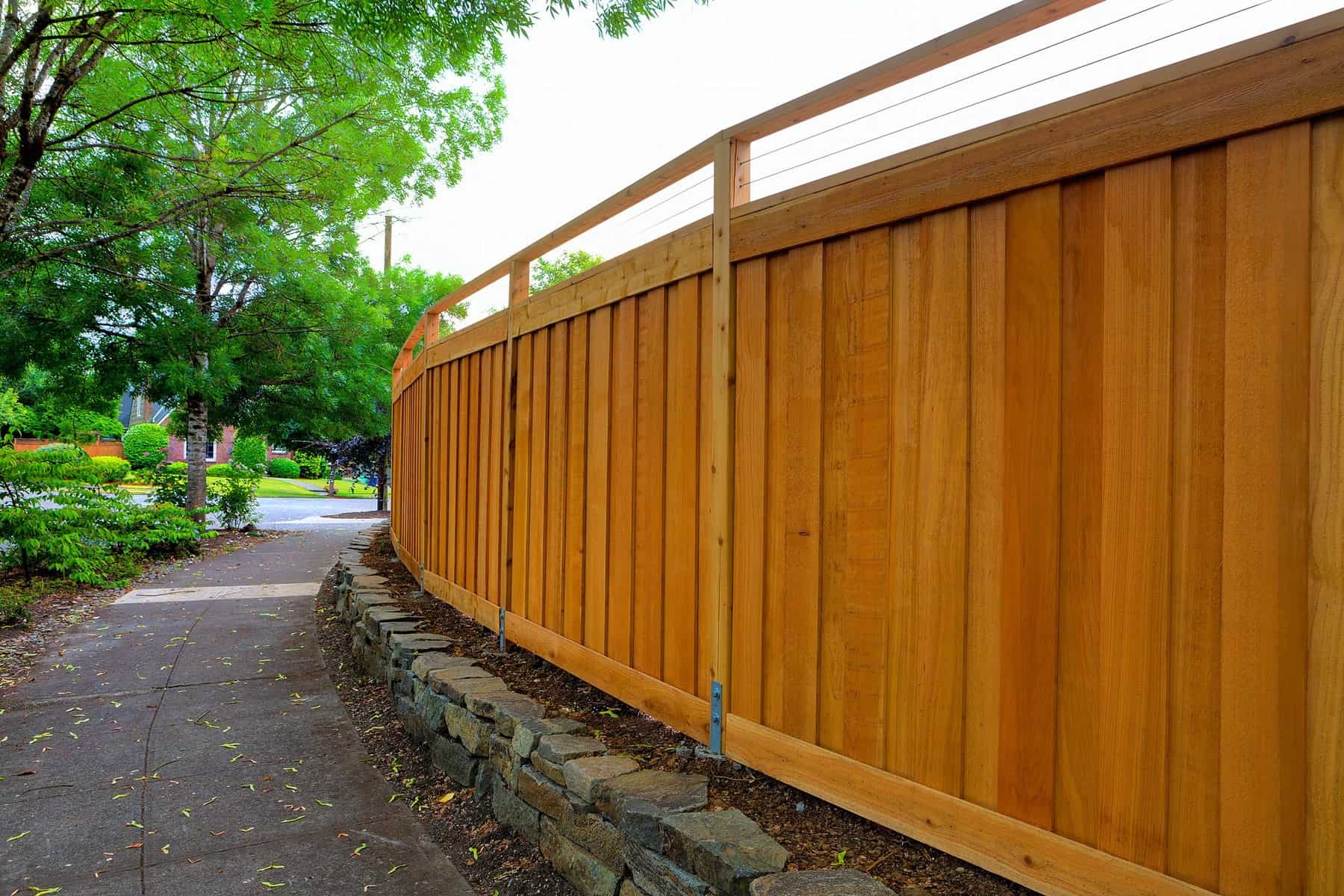
When It Makes Sense to Call a Professional
Staining a cedar fence is a manageable DIY project if the fence is accessible and in decent shape. But a professional saves real time and prevents costly mistakes in a few situations:
- The fence is tall, long, or has complex sections where even coverage is hard.
- The existing stain is failing or uneven and needs stripping before recoating.
- You are not sure what product was applied before, which affects what can go on top.
- You want a consistent finish with no lap marks, blotching, or bare spots.
A professional familiar with Seattle-area wood knows which products hold up here, how to prep properly, and how to apply efficiently without waste. They will also catch repairs that need attention first, loose boards, soft spots, or cracked wood that traps moisture. See our professional cedar fence staining services for what that involves.
What Happens If You Skip Staining Altogether
Some homeowners prefer the look of natural, weathered cedar, which is a valid aesthetic, but it helps to know what is happening to the wood when it goes unprotected.
Properly maintained stained cedar can look nearly new after 5 years, while unstained fences start showing age after about 18 months. That gray is not just cosmetic; the wood is breaking down at the surface as UV and moisture do their work.
Over time, unprotected cedar is more prone to rot, especially at the end grain and near the soil line, and moss and algae get a foothold faster, trapping moisture and speeding decay. Replacing boards or sections costs far more than staying on a regular staining schedule.
If your fence has already grayed, it may not be too late: a cedar brightener and thorough cleaning can reopen the wood for a penetrating stain, depending on how far the weathering has gone.
Ready to Protect Your Cedar Fence?
If your Edmonds cedar fence needs a fresh coat before the rains return, or you are not sure what it needs, reach out to Interland Painting. As local cedar fence staining experts, we will talk through your fence, the timing, and the product that makes the most sense for your property, and what we quote is exactly what you pay.
Call 425-671-2462 for a FREE estimate today.

